Femme Fatale


- Description
- Curriculum
- FAQ
- Notice
- Grade
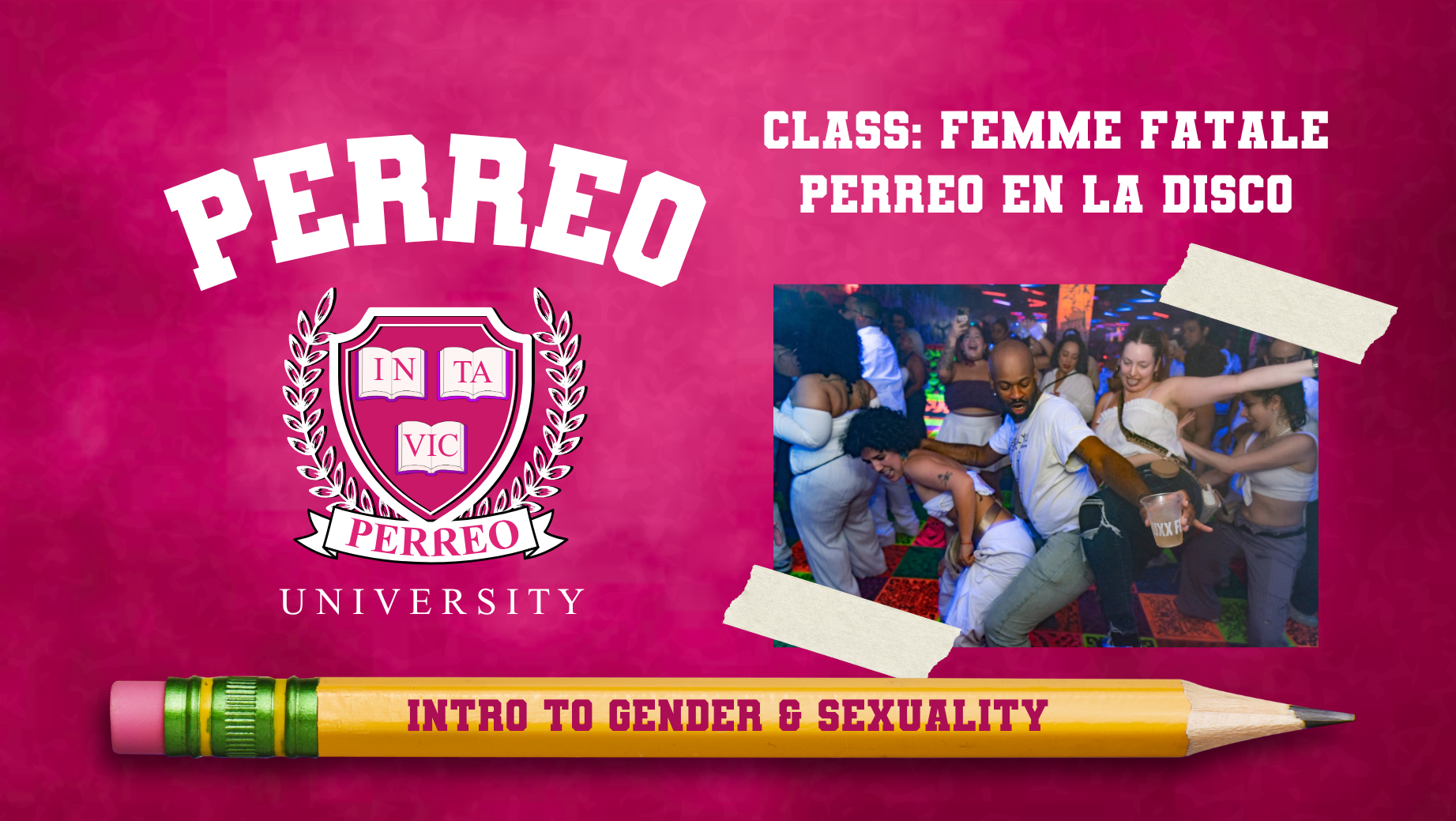
Femme Fatale
Gender, Sexuality & Power in Reggaeton
Who gets to be desired? Who gets to speak? And who gets to control the dance floor?
Femme Fatale explores how gender, sexuality, desire, and power have shaped reggaeton from its underground roots to its position as a global cultural force. Through the study of lyrics, music videos, performances, dance, fashion, nightlife, and artist personas, students will examine how reggaeton has both reinforced and challenged traditional ideas of masculinity, femininity, sexuality, and identity.
The course centers the women, queer, non-binary, and gender-expansive artists and communities who have used reggaeton as a space for visibility, resistance, pleasure, and cultural innovation. Students will examine historic femme icons such as Ivy Queen and Glory, whose voices and presence challenged a male-dominated industry, alongside artists including Tego Calderón and Villano Antillano, whose work has expanded conversations around race, gender, sexuality, and power within the genre.
Through an intersectional and ethnomusicological lens, Femme Fatale considers how reggaeton’s sound and cultural practices intersect with race, Afro-Caribbean identity, colonialism, class, politics, and globalization. Students will also explore queer-led nightlife and dance spaces, where DJs, artists, and event producers have transformed reggaeton into a site of community, liberation, and radical self-expression.
Rather than treating gender and sexuality as separate from the music, this course asks students to consider how they are heard in the music, embodied through dance, performed through fashion, negotiated in nightlife, and contested through culture.
No prior knowledge of gender studies or reggaeton is required. Students will leave the course with critical tools for understanding reggaeton not simply as a genre, but as a living cultural archive where identity, desire, power, and resistance collide.
-
1
 UNDERSTANDING & ANALYZING MEDIA
You interact with media almost every waking hour.
The song playing while you get dressed is media. The billboard you pass outside is media. A TikTok video is media. A podcast is media. A breaking-news alert is media. A meme sent in a group chat is media. A movie, advertisement, Instagram Story, YouTube video, newspaper article, music video, livestream, photograph, political advertisement, and AI-generated image are all forms of media.
But consuming media and understanding media are two different things.
Media literacy gives us tools for understanding what we are actually looking at, listening to, sharing, and creating.
-
2
THE EVOLUTION OF ROOTS
-
The Diversity of Reggaeton: Exploring the origins, evolution, and defining characteristics of Romantiqueo, Bachatón, Malianteo, Bhangratón, and Bellakeo.
-
Musical Influences & Production: Analyzing how R&B, bachata, hip-hop, South Asian music, and Caribbean rhythms have shaped reggaeton's distinct subgenres.
-
Cultural Identity & Lyrical Expression: Examining how romance, sexuality, street narratives, and cross-cultural influences contribute to reggaeton's musical diversity and evolution.
-
-
3
 Quiz: MEDIA LITERACY BASIX
-
4
THE FIGURES OF REGGAETON
An overview of the historic figures of the genre
• Jamaica
• Panama
• Puerto Rico
• Dominican Republic
-
5
PERREO COMBATIVO
The analysis of historic femme icons in reggaeton highlights how women like Ivy Queen and Glory paved the way in a male-dominated industry by asserting presence, voice, and authority within the genre. Their contributions are studied as acts of cultural resistance that reshaped reggaeton’s narratives around gender, power, and representation.
-
6
EVERY MESSAGE HAS A PURPOSE
Media is created for reasons.
A media message may attempt to:
INFORM
A weather report tells you that a storm is approaching.
ENTERTAIN
A comedy series tries to make you laugh.
PERSUADE
An advertisement tries to convince you to purchase something.
EDUCATE
A documentary may explain a historical event.
EXPRESS
A musician may communicate an emotion or experience.
BUILD COMMUNITY
An online community may connect people around a shared interest.
GENERATE ATTENTION
A provocative headline may be designed primarily to make you click.
MAKE MONEY
Content may generate advertising, subscription, ticket, merchandise, affiliate, or sponsorship revenue.
And media can have multiple purposes simultaneously.
A documentary can educate and entertain.
A podcast can inform while making money from advertisements.
An influencer can entertain while selling a product.
A music video can express an artistic idea while marketing a song.
Media literacy requires us to ask:
Why was this created?
-
7
EVERY MESSAGE HAS AN AUDIENCE
Media is also created with audiences in mind.
Consider an advertisement for a luxury watch.
Its creators make decisions about:
-
Language
-
Music
-
Actors
-
Locations
-
Clothing
-
Colors
-
Editing
-
Platform
-
Price
-
Cultural references
Those decisions help communicate with a particular audience.
A TikTok advertisement targeting teenagers may look very different from a magazine advertisement targeting wealthy professionals.
Understanding the intended audience can help explain why a media message looks and sounds the way it does.
Ask:
Who is this for?
Then ask:
What makes me think that?
-
-
8
DIFFERENT PEOPLE CAN INTERPRET THE SAME MEDIA DIFFERENTLY
Media does not automatically produce the exact same meaning for everyone.
People interpret messages through their own experiences.
Age, culture, language, education, nationality, community, personal experiences, values, interests, and knowledge can all affect interpretation.
Imagine two people watching the same music video.
One person recognizes a cultural reference immediately.
Another has never encountered it.
One considers the video nostalgic.
Another considers it completely new.
Neither person literally watched a different video.
They brought different experiences to the video.
Media literacy therefore isn't simply about discovering the one "correct" interpretation of every message.
It also involves asking:
Why did I interpret this message this way?
That question introduces an important part of media literacy:
examining ourselves as well as the media.
-
9
PERREO COMBATIVO
The analysis of historic femme icons in reggaeton highlights how women like Ivy Queen and Glory paved the way in a male-dominated industry by asserting presence, voice, and authority within the genre. Their contributions are studied as acts of cultural resistance that reshaped reggaeton’s narratives around gender, power, and representation.
Productivity Hacks to Get More Done in 2018
— 28 February 2017
- Facebook News Feed Eradicator (free chrome extension) Stay focused by removing your Facebook newsfeed and replacing it with an inspirational quote. Disable the tool anytime you want to see what friends are up to!
- Hide My Inbox (free chrome extension for Gmail) Stay focused by hiding your inbox. Click "show your inbox" at a scheduled time and batch processs everything one go.
- Habitica (free mobile + web app) Gamify your to do list. Treat your life like a game and earn gold goins for getting stuff done!
-
Media Literacy 101
$100
-
What is Prerequisite coursesA prerequisite is a specific course that you must complete before you can take another course at the next grade level.
- Flexible deadline
- Hours of on-demand video
- Downloadable optional reading materials
- Assignments
- Certificate of completion
- Good grasp of the English language
- Basic knowledge of gender & sexuality required
- Suitable for all levels
- Anyone passionate about gender & sexuality in the spectrum of Latine Culture